
The Importance of Meeting Rooms in Coworking Spaces


Coworking spaces are becoming the preferred choice for freelancers, students, startups, and small businesses because they offer flexible, affordable, and comfortable work environments. But one feature that truly sets a coworking space apart is its meeting rooms. These rooms play a major role in helping people collaborate, present ideas, discuss plans, and meet clients with confidence.
A shared open workspace is useful for everyday tasks, but when it comes to serious discussions, privacy, focus, and professionalism become important. This is where meeting rooms add value. Let’s explore why meeting rooms are essential in coworking spaces and how they improve productivity, trust, and teamwork.
1. A Space That Supports Professional Discussions
Meeting rooms create professional meeting environments where people can talk without distractions. In open coworking areas, noise from phone calls, conversations, or typing can disturb important discussions. But inside a meeting room, the setting is calm, quiet, and suitable for activities like:
brainstorming sessions
client presentations
interviews
online video calls
team planning
A professional-looking room helps you feel confident and makes a good impression on clients or partners. It shows that you take your work seriously and value their time.
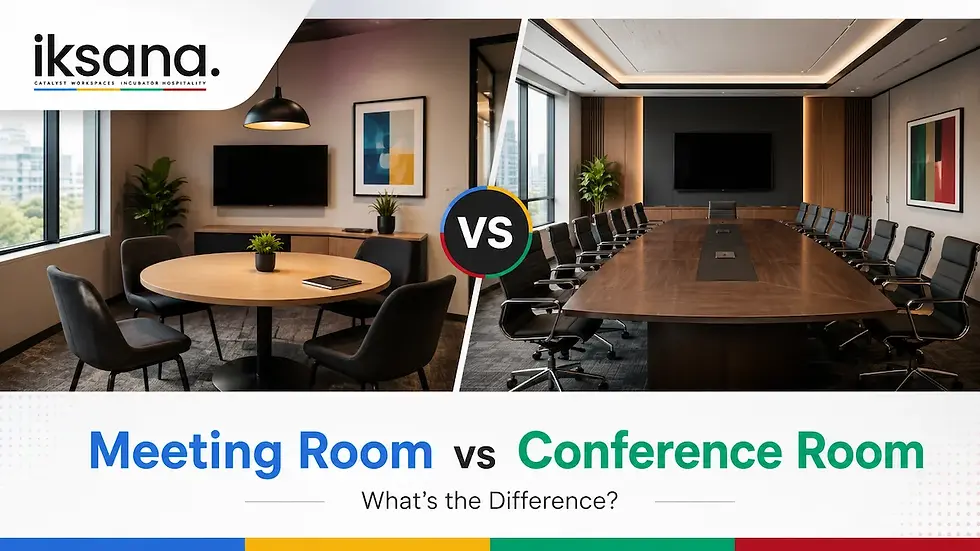
Before booking a space, it is important to understand the difference between a meeting room and a conference room based on capacity, purpose and available facilities.
2. Privacy That Builds Trust
Whether you are discussing business finances, sharing new ideas, planning strategies, or reviewing client data, privacy is essential. Meeting rooms offer meeting privacy solutions that help protect sensitive conversations.
Private rooms make sure that:
important documents remain confidential
sensitive talks stay between the right people
online meetings are not overheard
teams can discuss freely without fear of interruption
In coworking spaces, private meeting rooms create a safe space where teams can make decisions comfortably and securely.
3. Better Collaboration and Teamwork
Teams often need a quiet space where everyone can sit together, share ideas, and plan tasks. A meeting room provides the right setup for collaboration. It usually includes tools like screens, whiteboards, and comfortable seating that help people focus and communicate better.
Here is a simple comparison to show the difference:
Feature | Open Workspace | Meeting Room |
Noise Level | High | Low |
Privacy | Low | High |
Focus | Often disturbed | Very high |
Best For | Daily tasks | Important discussions |
Tools | Limited | Screens, boards, adapters |
This makes meeting rooms ideal for group work, especially when the task requires deep thinking and teamwork.
4. Smooth, Professional Client Meetings
First impressions matter. When a client visits, the environment you choose for the meeting says a lot about your professionalism. Meeting rooms offer a tidy, formal, and organised space—something that open coworking desks cannot always provide.
Inside a meeting room, clients feel:
respected
valued
comfortable
confident in your work
This can help businesses build trust, win deals, and create long-term partnerships.
5. Perfect for Online Meetings and Video Calls
With remote teams and global clients becoming common, online meetings happen almost every day. However, open workspaces often have background noise or movement, which can make video calls difficult.
Meeting rooms solve this problem by offering:
noise-free surroundings
stable internet connectivity
screens for presentations
seating that supports long calls
These features help you communicate clearly and look professional during online meetings.
6. A Creative Space for Brainstorming
Many meeting rooms are designed to support creative thinking. They often include:
writing boards
markers
sticky notes
projectors
wide tables
These tools make group discussions more exciting and help teams share ideas visually. Creative spaces encourage better teamwork and bring more useful ideas to the table.
7. Increases Productivity for Individuals and Teams
When you move complex discussions out of the open area and into a meeting room, everyone benefits. Other coworkers in the shared space remain undisturbed, and the people inside the meeting room can focus without distractions.
This leads to:
faster decision-making
fewer mistakes
clearer communication
more productive teamwork
Meeting rooms help maintain a peaceful coworking environment where everyone can work comfortably.
8. Supports Every Type of Business Need
Meeting rooms are useful for many different types of work. Here are some examples of how various professionals use them:
Freelancers: client calls, project discussions, online interviews
Startups: investor pitches, planning meetings, product demos
Students: group studies, project presentations
Small Businesses: staff meetings, training sessions
Remote Workers: video conferences, onboarding calls
This makes meeting rooms one of the most flexible features in coworking spaces.
9. Helps Build Community in Coworking Spaces
Coworking spaces are known for their friendly communities and networking opportunities. Meeting rooms support this by providing a place where members can meet, collaborate, and work on common goals. Many coworking communities even use meeting rooms for:
workshops
training programs
small events
learning sessions
This encourages people to connect, learn, and grow together.
Conclusion
Meeting rooms are not just extra facilities, they are essential parts of a coworking space. They offer professional meeting environments, better focus, comfort, and strong meeting privacy solutions that support all types of teams and individuals. From client presentations to online calls, meeting rooms make work smoother, more confident, and more organised.
If you are searching for a workspace that offers well-designed meeting rooms along with a peaceful and modern work environment, Iksana Workspaces provides the ideal setup for anyone looking for high-quality shared office solutions and coworking in Dehradun.


Comments